Welcome to the Tauhindauli Park Self-Guided Tour

            Scroll Down And

           Click On The Sign

        You Are Interested In
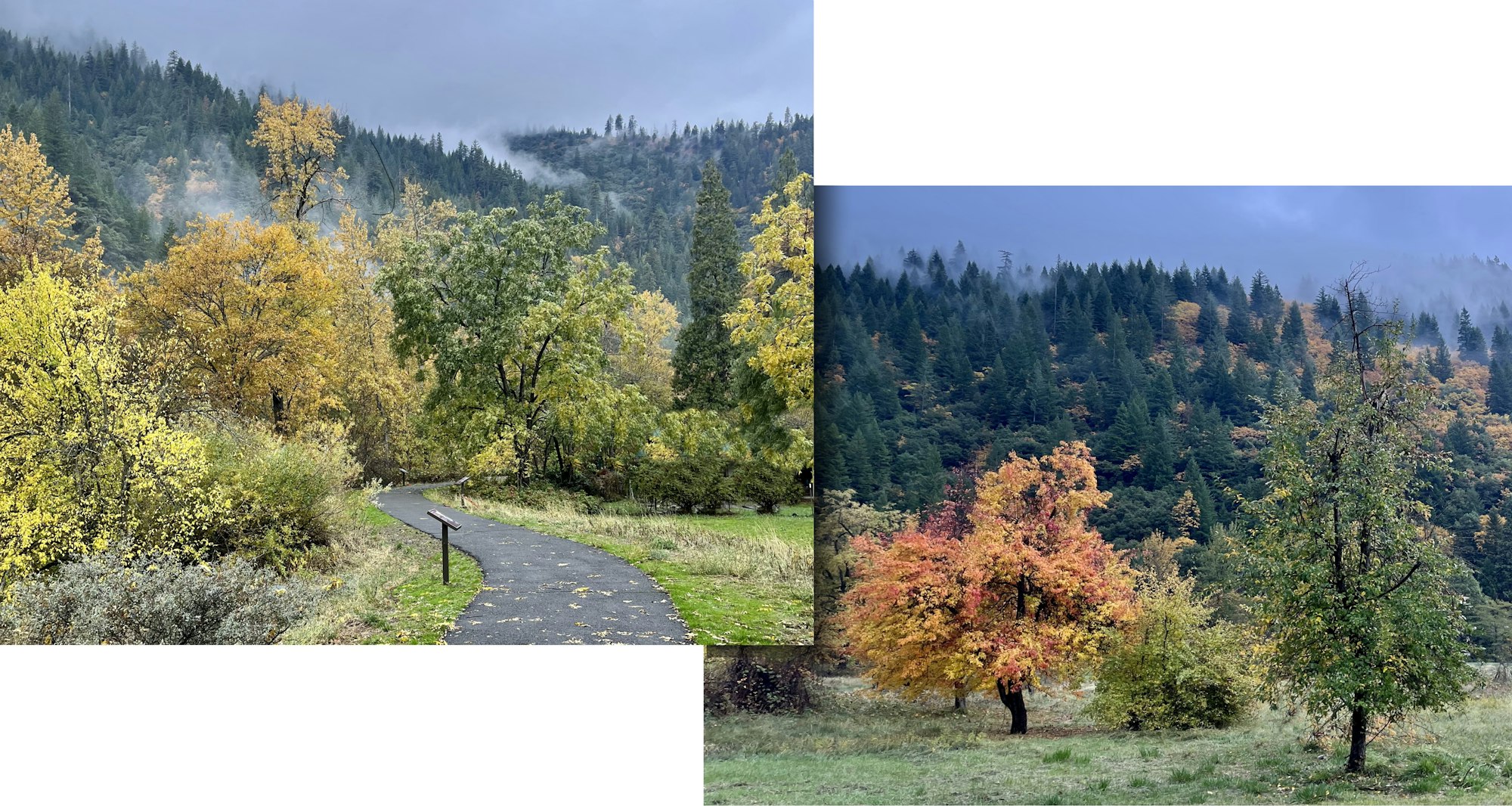
 

Two images of a scenic forest with autumn foliage, featuring vibrant yellow and orange leaves against a misty backdrop.

Upper Soda Springs Road, Dunsmuir, California

Welcome to Tauhindauli Park, a place of beauty, history, and natural wonders. This website will give you information about the Park in addition to the signs on the Self-Guided Tour inside the Park.
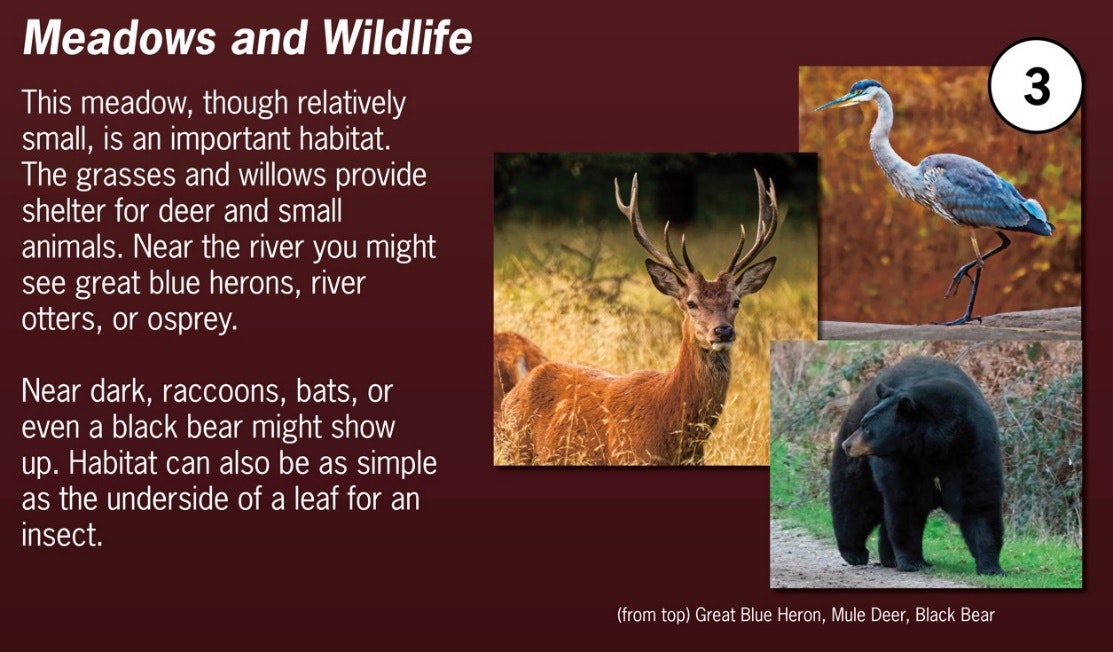
The image describes a meadow habitat supporting wildlife like deer, herons, otters, raccoons, bats, and bears.
      Sign #3
The image discusses the Tauhindauli and McCloud-Masson families, early residents who fished for salmon and built a resort.
      Sign #1
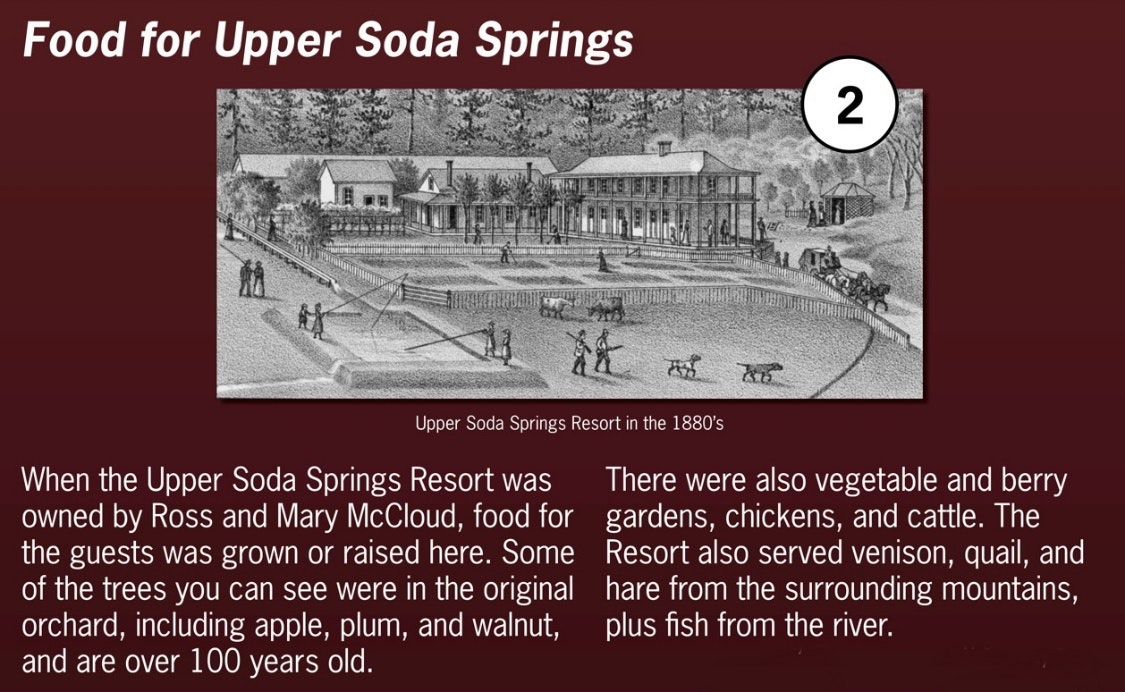
The image discusses food sources at Upper Soda Springs Resort in the 1880s, highlighting homegrown produce and wildlife.
      Sign #2
The Upper Soda Springs, originating from Mount Shasta, offers mineral-rich sparkling water, popular since the early 1800s.
     Sign #4
The Okwanuchu were a little-known Native American tribe, hunter-gatherers in Dunsmuir, known for seasonal movements and salmon runs.
     Sign #6
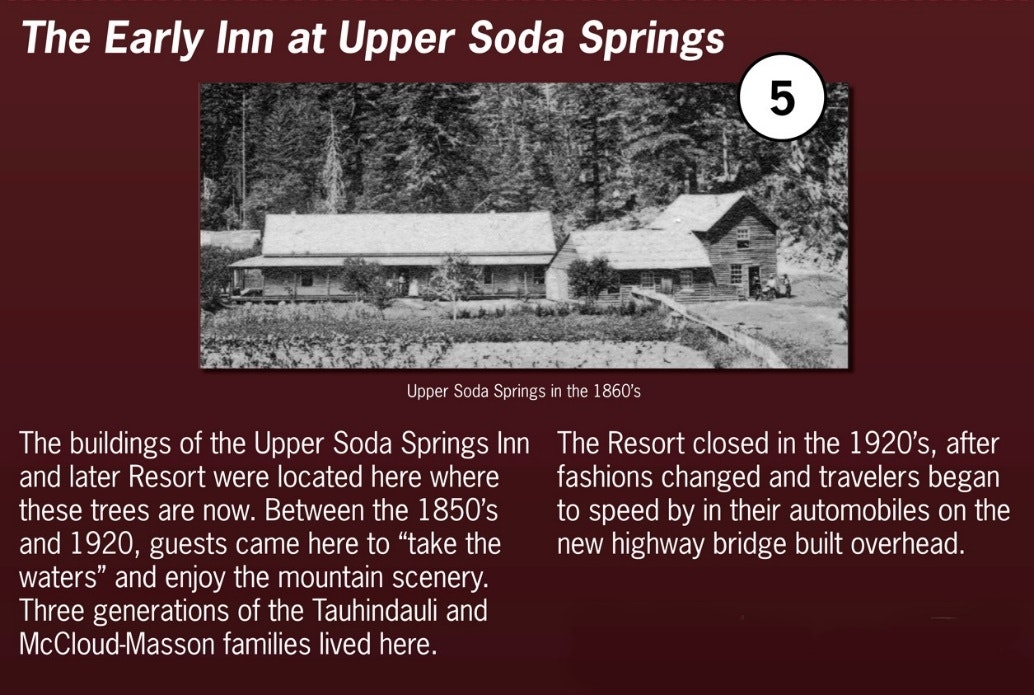
The image describes the Upper Soda Springs Inn, a resort active from the 1850s to 1920s, highlighting its history and closure.
     Sign #5
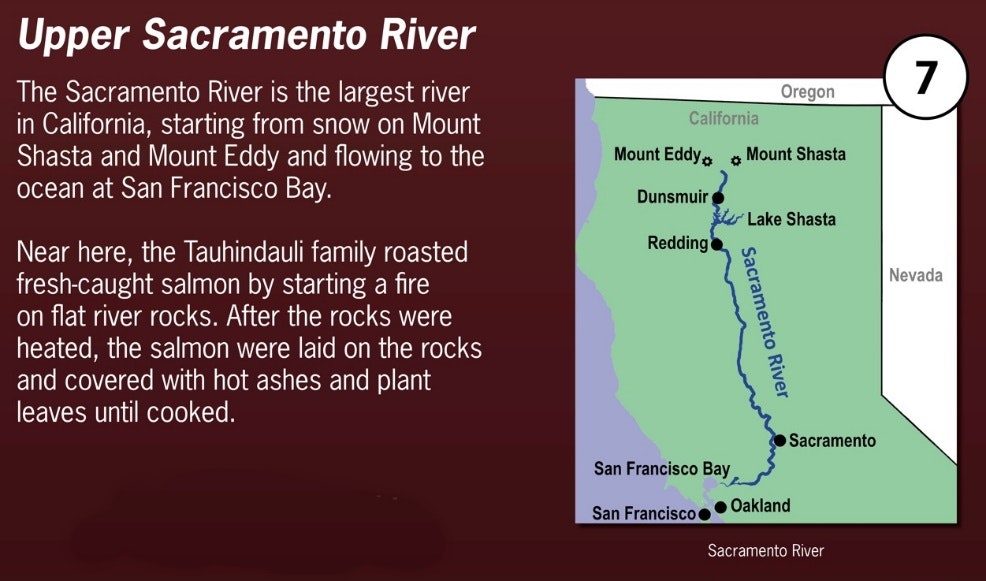
The Upper Sacramento River, California's largest river, flows from Mount Shasta to San Francisco Bay, with traditional salmon cooking methods.
     Sign #7
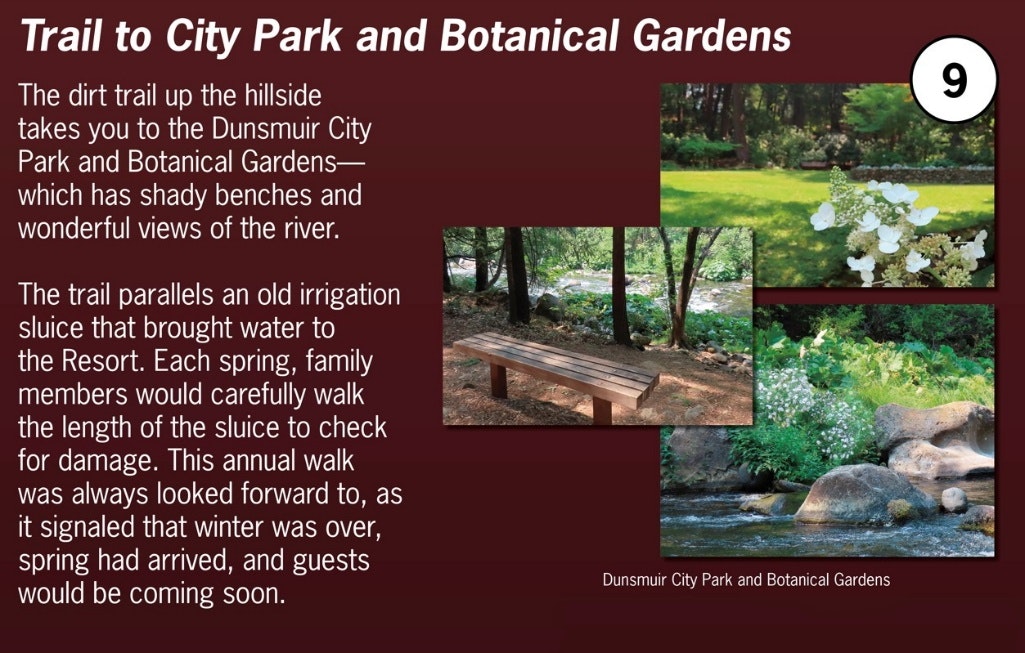
The image features a text about the Dunsmuir City Park and Botanical Gardens, highlighting its trail, benches, and views of the river.
     Sign #9
The image describes stables and cowsheds at a resort, highlighting their role in serving stagecoaches and providing food for guests.
     Sign #8
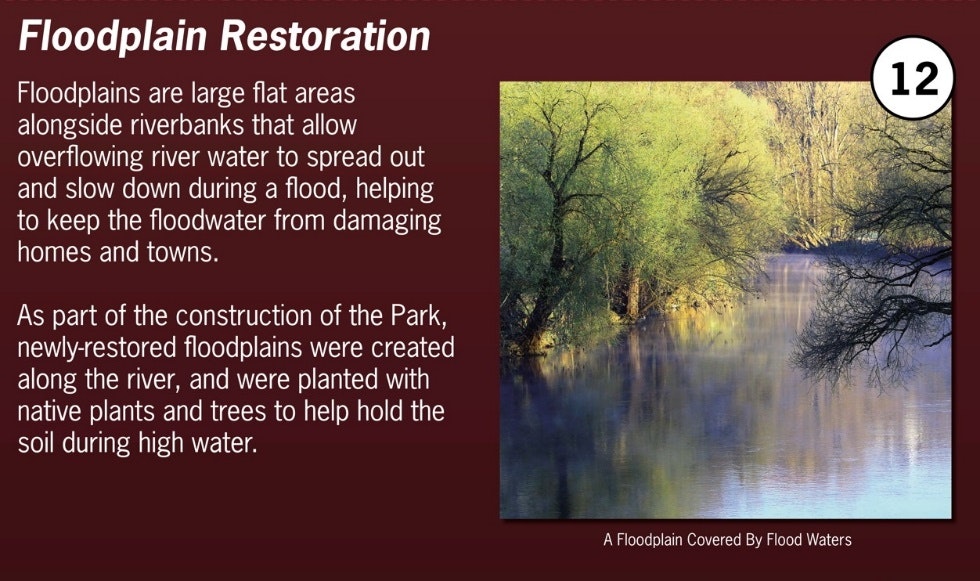
The image explains floodplain restoration, highlighting their role in managing floodwaters and supporting native vegetation.
   Sign #12
The Old Cable Bridge Site, built in 1888, features a historic cable footbridge over the Sacramento River, once used by railroad travelers.
   Sign #10
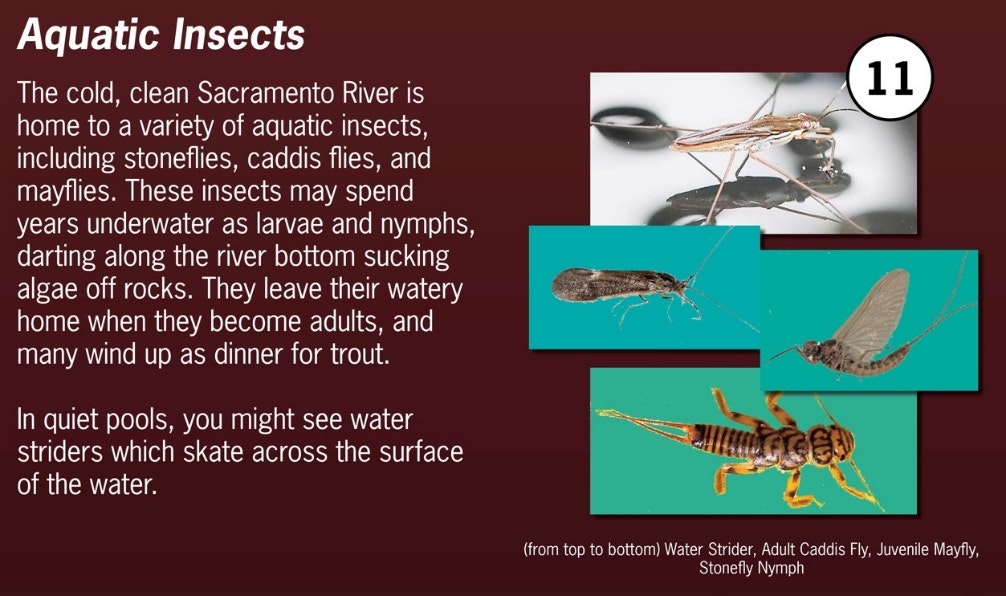
The Sacramento River hosts aquatic insects like stoneflies, caddis flies, and mayflies, crucial for the ecosystem.
  Sign #11


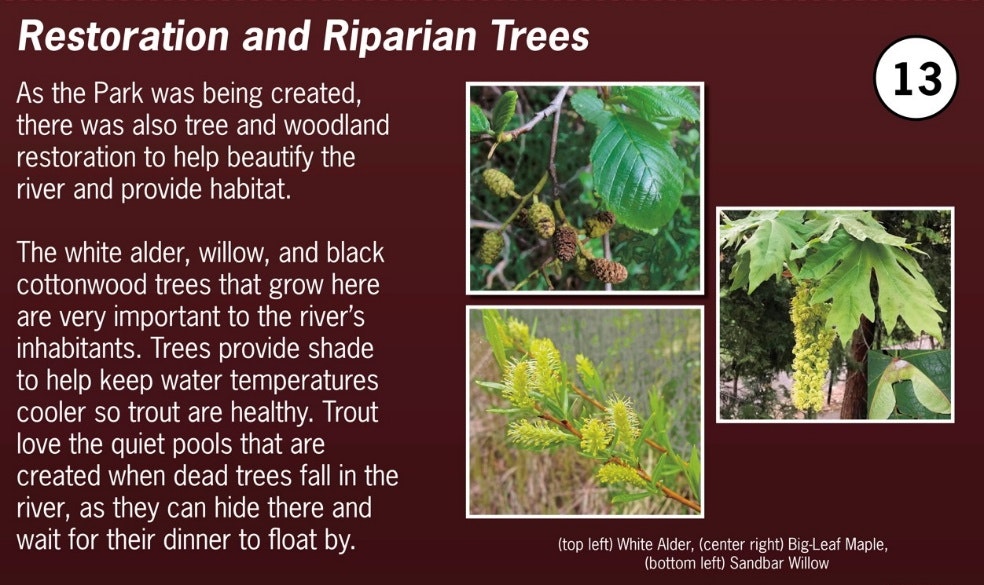
The image discusses tree restoration in a park, highlighting white alder, willow, and black cottonwood's role in enhancing river habitats.
   Sign #13
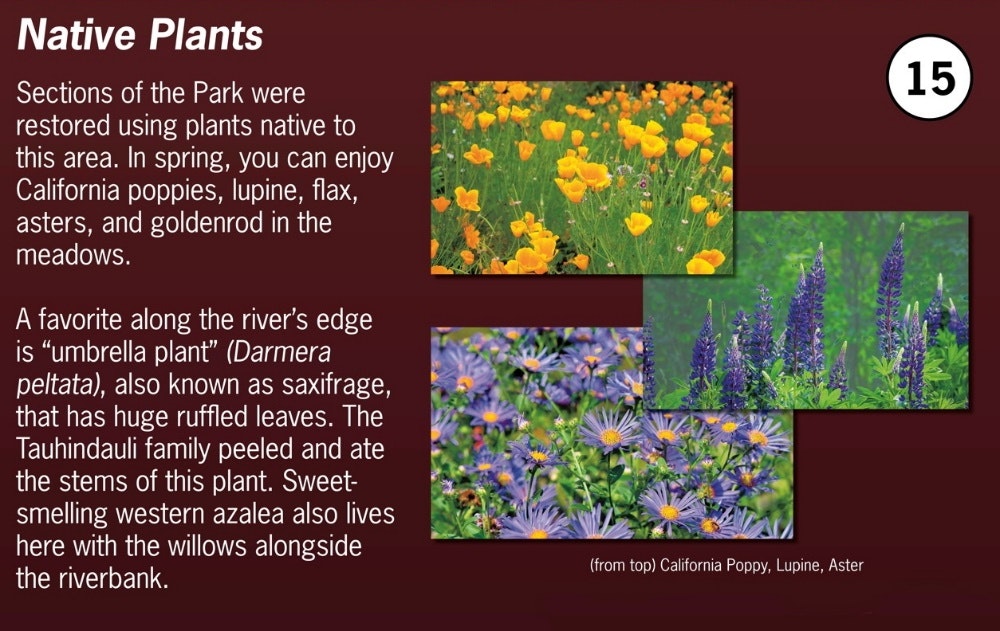
The image highlights native plants in a park, featuring California poppies, lupine, aster, and the umbrella plant along the riverbank.
   Sign #15
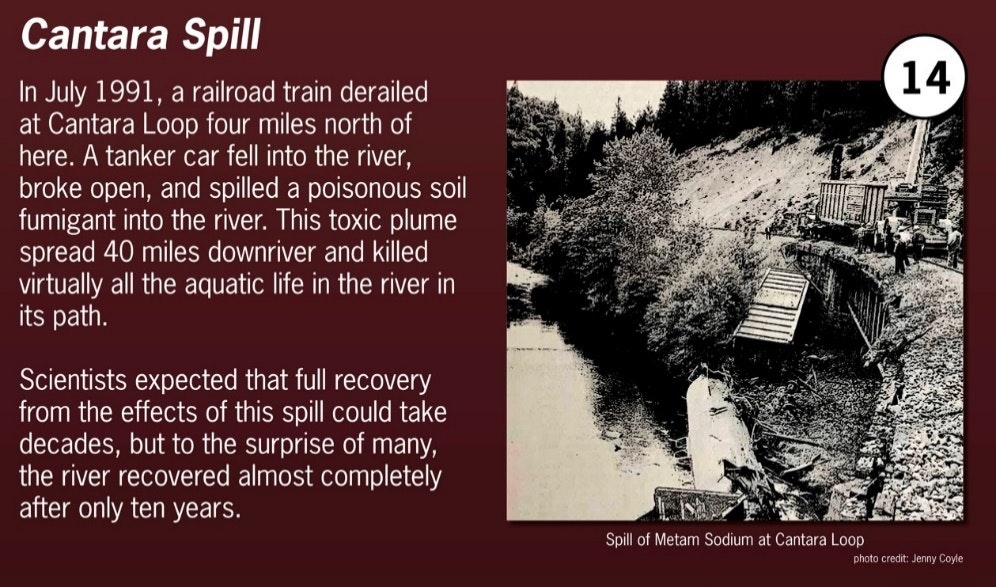
In July 1991, a train derailment caused a toxic spill in a river, killing aquatic life. Recovery took just ten years.
   Sign #14
The image discusses an urban park next to train tracks, roads, and utilities, detailing local runoff into the Sacramento River.
   Sign #18
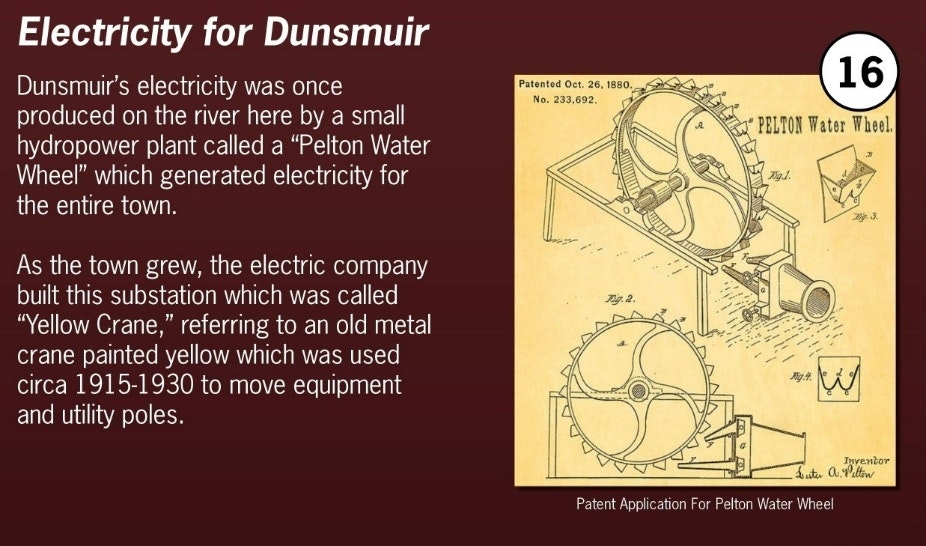
The image discusses Dunsmuir's electricity generation via a Pelton Water Wheel and the Yellow Crane substation used from 1915-1930.
   Sign # 16
The image features a Southern Pacific steam engine, highlighting Dunsmuir's historical significance in railroads and train photography.
   Sign #17
Pump Sign Icon
   Sign #21
"Critter Creek" was named by Dunsmuir Elementary students. Native plants thrive alongside the restored creek in the park.
   Sign #19
Summary of the Siskiyou Trail's history and modern significance, with a map showing its route from Fort Vancouver to San Francisco.
   Sign #20
The image discusses a popular fishing spot, highlights various fish species, and promotes fishing line recycling to protect wildlife.
   Sign #23
The image highlights Mossbrae Falls, famous for its icy, clear water, and mentions a historic toll bridge built in the 1850s.
   Sign #22


Also be sure to visit the "Friends of

        Tauhindauli Park" website!

          www.friends-of-tpark.org